

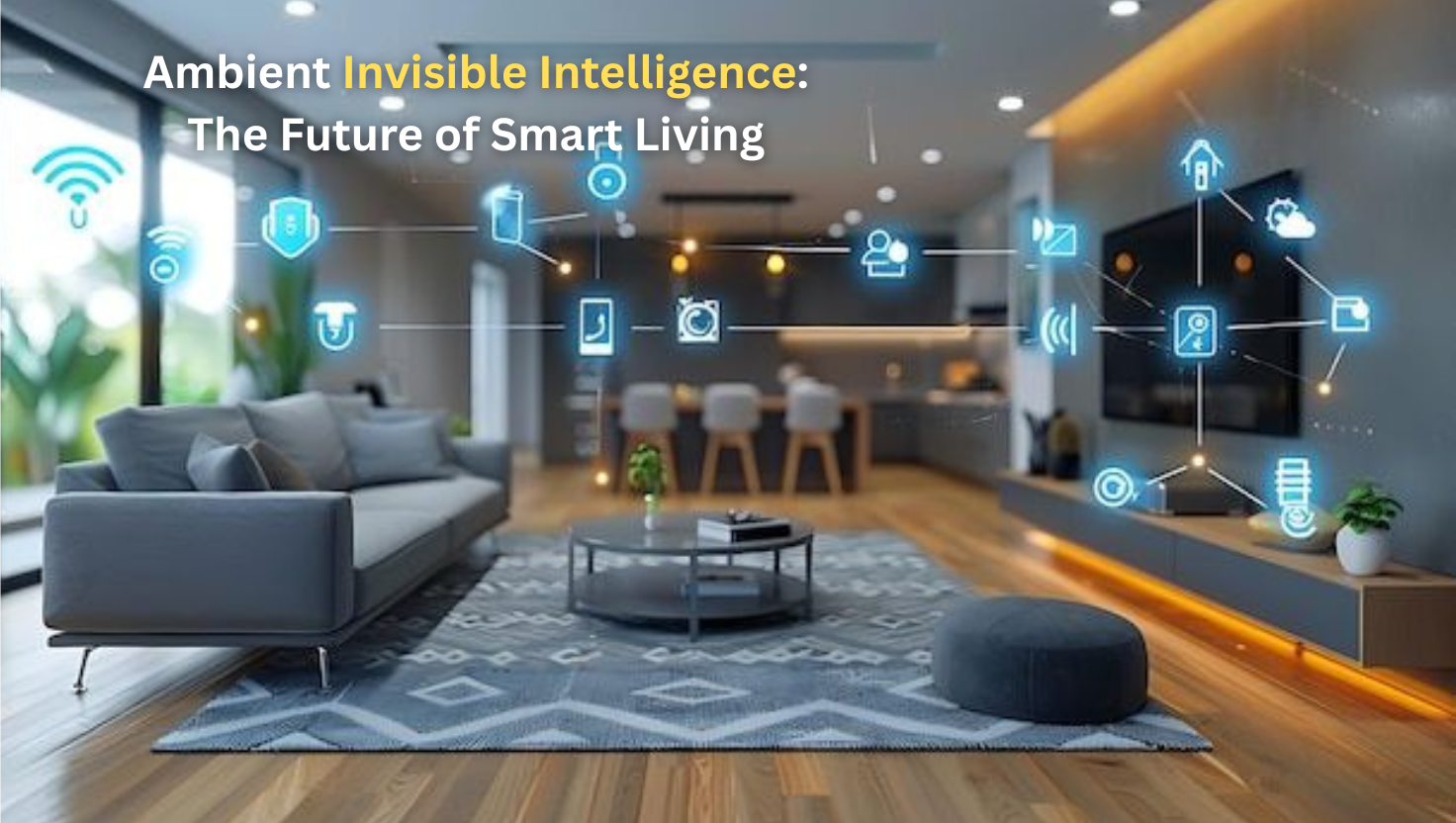
At Armania Wire, we believe that technology is no longer just about machines, devices, or gadgets it is about creating experiences that feel natural, seamless, and invisible. This is exactly what ambient invisible intelligence represents: a silent layer of smart systems working around us, anticipating our needs, and responding without any visible commands or interruptions.
Unlike traditional artificial intelligence that demands active interaction, ambient invisible intelligence blends into the background. It transforms homes, workplaces, and cities into ecosystems that respond naturally, almost like an extension of human thought. The beauty of this evolution is that the technology disappears into the fabric of daily life, making living smarter without feeling controlled by machines.
Understanding Ambient Invisible Intelligence
Ambient invisible intelligence is not a tool you pick up or a system you see blinking with lights. It is an interconnected web of sensors, data processors, and responsive technologies that operate quietly in the background. It observes patterns, interprets behavior, and adjusts environments accordingly.
Think of a room that lights up to your preferred brightness without you flipping a switch, or an office that adjusts temperature and air quality to maintain productivity. This form of intelligence thrives on context, blending into spaces so naturally that its presence feels invisible.
How It Differs from Traditional Artificial Intelligence
Artificial intelligence often depends on visible prompts—chatbots, apps, or voice assistants. Ambient invisible intelligence, however, removes that layer of interaction. It does not wait for a question or a command; it predicts, acts, and delivers results seamlessly.
Key Differences:
- Interaction: Traditional AI requires direct input, while ambient invisible intelligence works passively.
- Visibility: Regular AI tools are obvious and interactive, whereas ambient invisible intelligence is hidden within environments.
- Experience: Traditional AI feels like using a system, ambient invisible intelligence feels like living in harmony with technology.
Everyday Applications of Ambient Invisible Intelligence
The best way to understand this concept is by looking at its practical applications in daily life.
In Smart Homes
- Lights that adjust automatically to time of day and mood.
- Security systems that operate silently, identifying unusual movements without constant alerts.
- Appliances that learn routines and optimize energy consumption.
In Workspaces
- Office desks that adjust ergonomically without manual settings.
- Meeting rooms that prepare presentation screens as participants enter.
- Climate systems that balance temperature based on the number of people.
In Urban Spaces
- Traffic lights that respond in real-time to reduce congestion.
- Public safety systems that monitor crowds without intrusive surveillance.
- Street lighting that adapts based on pedestrian activity.
Why Ambient Invisible Intelligence Matters for the Future
Technology should enhance human life, not complicate it. The importance of ambient invisible intelligence lies in its ability to create frictionless experiences.
Key Benefits:
- Comfort: Living spaces that adapt naturally improve quality of life.
- Efficiency: Energy and resource usage become optimized.
- Safety: Subtle monitoring ensures better protection without intruding on privacy.
- Accessibility: Those who struggle with traditional devices benefit from seamless systems.
The Role of Data in Shaping Invisible Systems
Ambient invisible intelligence thrives on data—patterns of behavior, environmental conditions, and predictive analytics.
How Data Works Behind the Scenes:
- Sensors collect real-time information.
- Systems analyze context, not just commands.
- Predictive models anticipate needs before they are voiced.
This reliance on context-driven data creates experiences that feel personal yet collective, aligning environments with human intent.
Ethical Dimensions of Ambient Invisible Intelligence
Whenever technology becomes invisible, ethical discussions grow stronger. Questions arise about transparency, control, and privacy.
Core Ethical Considerations:
- Consent: Users must know when and how they are being monitored.
- Transparency: Invisible should not mean undisclosed.
- Control: People should always have the option to override or switch off systems.
- Privacy: Data should remain secure and anonymous.
Balancing innovation with responsibility ensures trust in the technology.
Challenges Facing the Widespread Adoption
Although promising, ambient invisible intelligence faces hurdles before becoming mainstream.
Key Challenges:
- High costs of development and integration.
- Lack of standardization across industries.
- Concerns over surveillance and misuse of data.
- Need for stronger cybersecurity frameworks.
The journey towards invisible intelligence is ongoing, but with the right strategies, these challenges can be overcome.
How Industries Are Adopting Ambient Invisible Intelligence
Different sectors are exploring this silent revolution in unique ways.
| Industry | Application | Impact |
| Healthcare | Patient monitoring without constant checks | Reduces stress for patients |
| Retail | Stores adjusting displays based on shopper flow | Increases engagement |
| Education | Classrooms adapting learning tools invisibly | Enhances teaching |
| Transportation | Cars sensing driver fatigue | Improves safety |
This cross-industry adoption shows how ambient invisible intelligence is reshaping entire ecosystems.
Steps Toward Building an Ambient Invisible Future
Creating such an environment requires thoughtful planning.
Steps Involved:
- Integration of sensors into everyday objects.
- Development of context-aware systems.
- Collaboration between technology providers and policymakers.
- Education for users to build awareness and trust.
Each step brings us closer to a world where technology supports human life silently and effectively.
Frequently Asked Questions
What is ambient invisible intelligence in simple terms?
It is technology that works silently in the background, predicting needs and adjusting environments without visible interaction.
Is ambient invisible intelligence different from AI?
Yes, while AI often requires direct commands, ambient invisible intelligence works passively and invisibly.
Where is ambient invisible intelligence most useful?
It is most valuable in homes, offices, cities, and healthcare systems where seamless integration improves life quality.
Does it threaten privacy?
There are concerns, but with strict data protections and transparent practices, it can remain safe and ethical.
Will it replace visible smart devices?
Not entirely. Instead, it will complement them by making interactions smoother and less intrusive.
Conclusion
At Armania Wire, we see ambient invisible intelligence not as science fiction but as the next natural step in human progress. It promises a life where technology supports rather than distracts, where homes, offices, and cities adapt without demand, and where innovation blends invisibly into daily existence. The key lies in adopting it responsibly—balancing convenience with privacy, intelligence with transparency, and progress with ethics.
The invisible future is already here, and those who embrace it will discover a world where technology feels less like a tool and more like a silent companion.